

The medieval fortress:
The origins of one of the most powerful lordships of the Jura
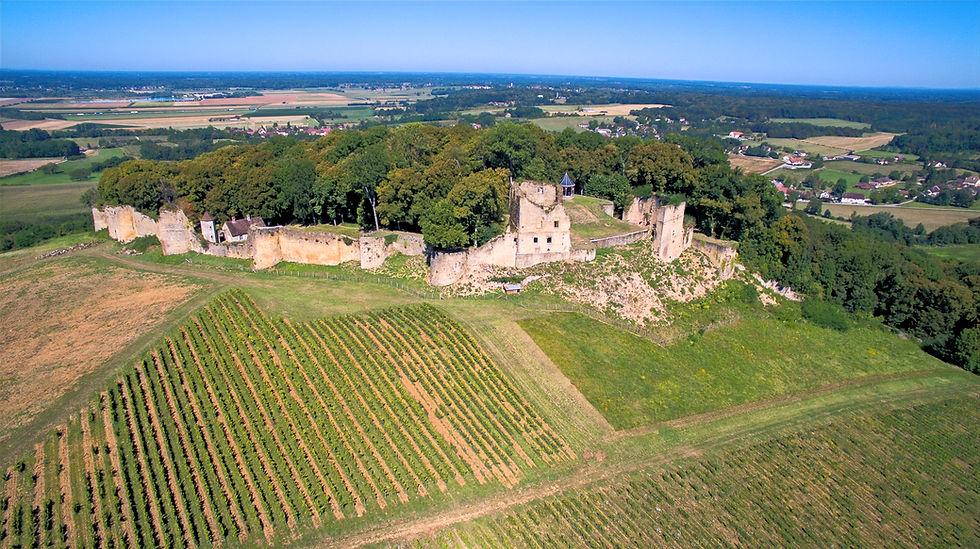
Tradition attributes the first fortifications of Arlay to Gérard de Roussillon in the 9th century. In 1269, the estate passed to Jean I de Chalon-Arlay, founder of the powerful Chalon-Arlay line. Thanks to their wealth, derived in particular from the saltworks of Salins-les-Bains, the lords of Arlay built the largest fortress overlooking the Jura plain and developed the estate's vineyards. In 1479, after the death of Charles the Bold, King Louis XI ordered the destruction of the Arlay fortress during his campaigns against the strongholds of Franche-Comté.
The castle and its 18th-century park:
When a princess transforms Arlay into an exceptional residence
After several centuries of inheritance and succession linked to the Princes of Orange, the estate returned in the 18th century to Élisabeth-Pauline de Gand de Mérode de Montmorency, Countess of Lauraguais. Around 1770, captivated by the beauty of the site, she purchased the former Minims convent located at the foot of the medieval ruins to make it her principal residence. For nearly ten years, she transformed the property: creating the current château, building the stables, and landscaping the large romantic park that still contributes to Arlay's renown today.

19th Century Decor & Furniture:
The time for the art of living
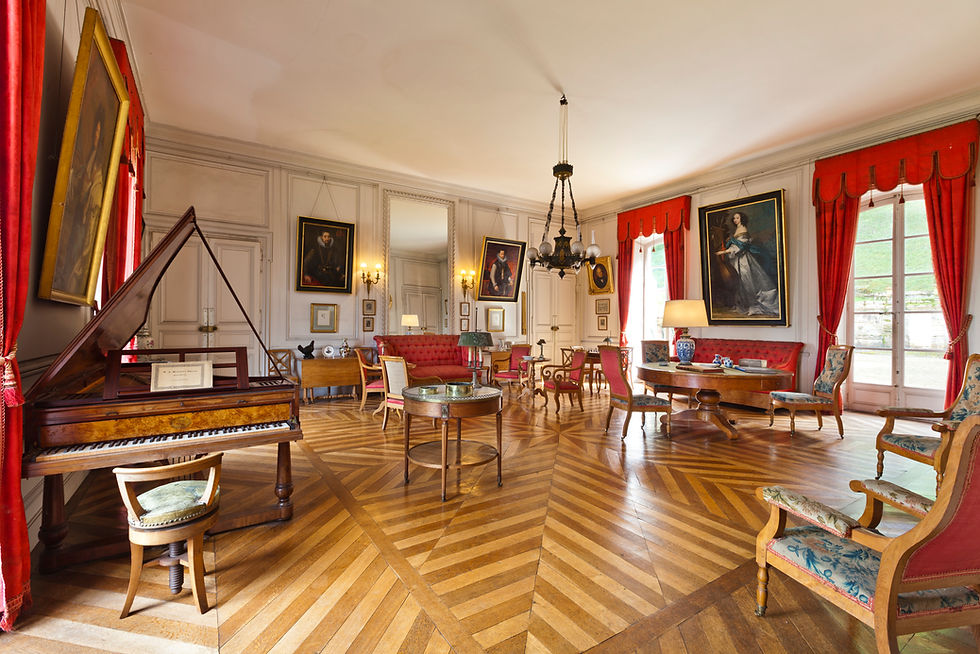
After the upheavals of the French Revolution—during which the Countess of Lauraguais was guillotined in 1794—the estate was revived by her grandson, Pierre d'Arenberg, who reclaimed the property in 1825. He remodeled the château's interiors in the Restoration style and commissioned much of the current furniture from the Jura cabinetmaker Alexis Répecaud. The landscaped park was maintained and enhanced throughout the century, giving the estate its romantic and intimate atmosphere.
Today, it's a castle that is still inhabited, vibrant, and open to visitors.
Still inhabited by descendants of the same family line, the Château d'Arlay remains a vibrant place where heritage, gardens, and vineyards have been passed down for over twelve centuries. From 1960 onwards, Renaud de Laguiche and then his son Alain de Laguiche developed the wine estate and opened the château more widely to visitors. In 1996, the "Garden of Games" was added to the historic gardens, which are now designated a "Remarkable Garden."